

Every young person deserves to grow and learn in a safe, supportive environment free from fear and violence. Unfortunately, bullying, whether in-person or online, can cause serious harm. According to UNICEF, it can lead to depression, anxiety, or even substance misuse. Talking openly and honestly about bullying helps young people feel safe sharing their experiences and builds trust when they need support most.
Bullying can be painful and complicated, but with open communication, empathy, and consistent support, young people can learn to navigate conflict in healthy ways. Whether your child is experiencing bullying or struggling with their own behavior, your calm presence and encouragement can help them grow into a kinder, more confident person.
Download the PDF for the Full Tip
Why Do Kids Bully?
Bullying can happen for various reasons, and understanding why can help you respond with empathy. Younger children may act out because they struggle to express emotions or understand how their actions affect others. Older kids might bully to fit in, gain popularity, or cope with loneliness and social isolation. Remember that kids who bully are not “bad.” Often, they’re struggling with their own challenges, like stress at home, past trauma, or feeling powerless in other parts of their lives. With support and guidance from caring adults, they can learn how to manage their emotions and build healthy relationships.
Preventing Bullying Before it Starts
Check in Early and Often
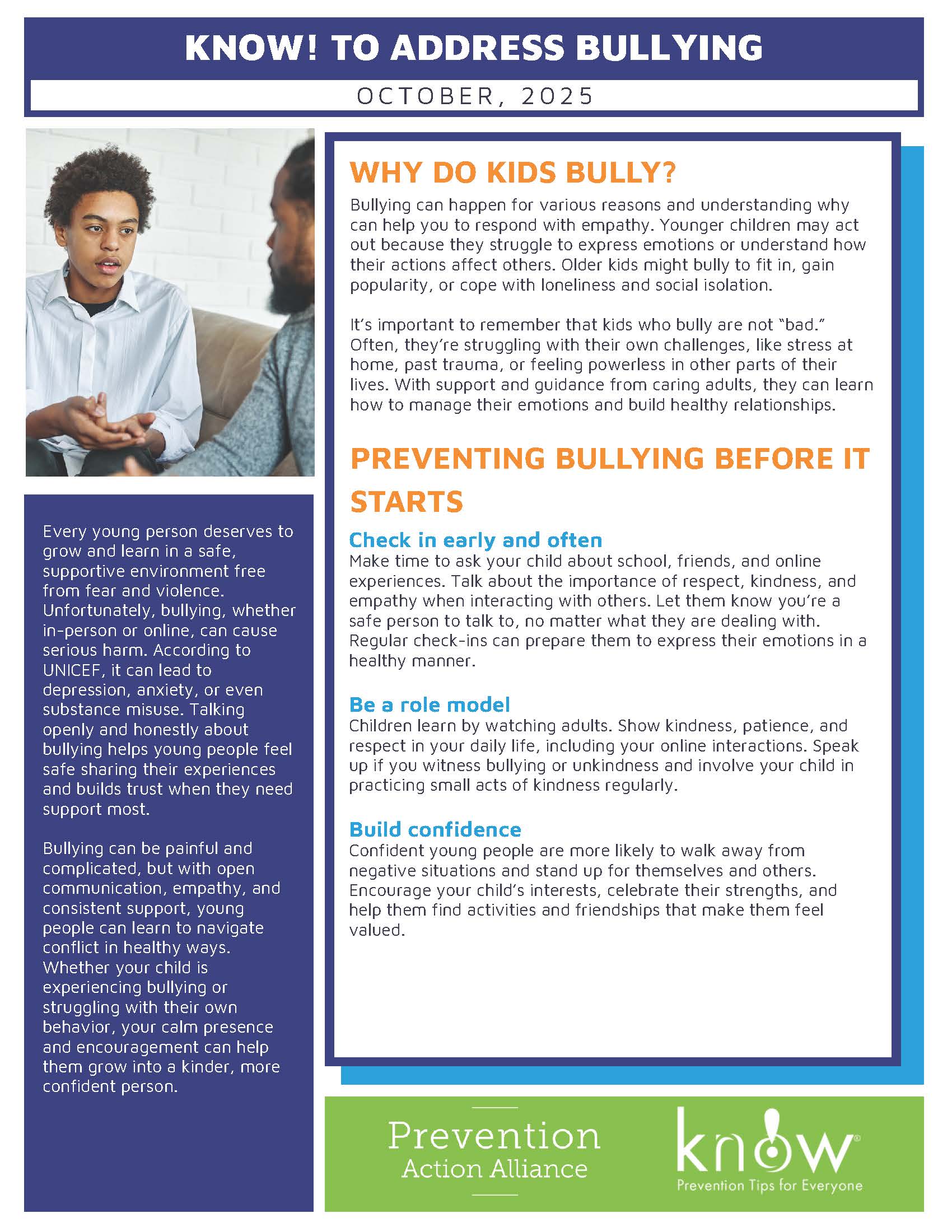
Make time to ask your child about school, friends, and online experiences. Talk about the importance of respect, kindness, and empathy when interacting with others. Let them know you’re a safe person to talk to, no matter what they are dealing with. Regular check-ins can prepare them to express their emotions in a healthy manner.
Be a Role Model
Children learn by watching adults. Show kindness, patience, and respect in your daily life, including your online interactions. Speak up if you witness bullying or unkindness and involve your child in practicing small acts of kindness regularly.
Build Confidence
Confident young people are more likely to walk away from negative situations and stand up for themselves and others. Encourage your child’s interests, celebrate their strengths, and help them find activities and friendships that make them feel valued.