
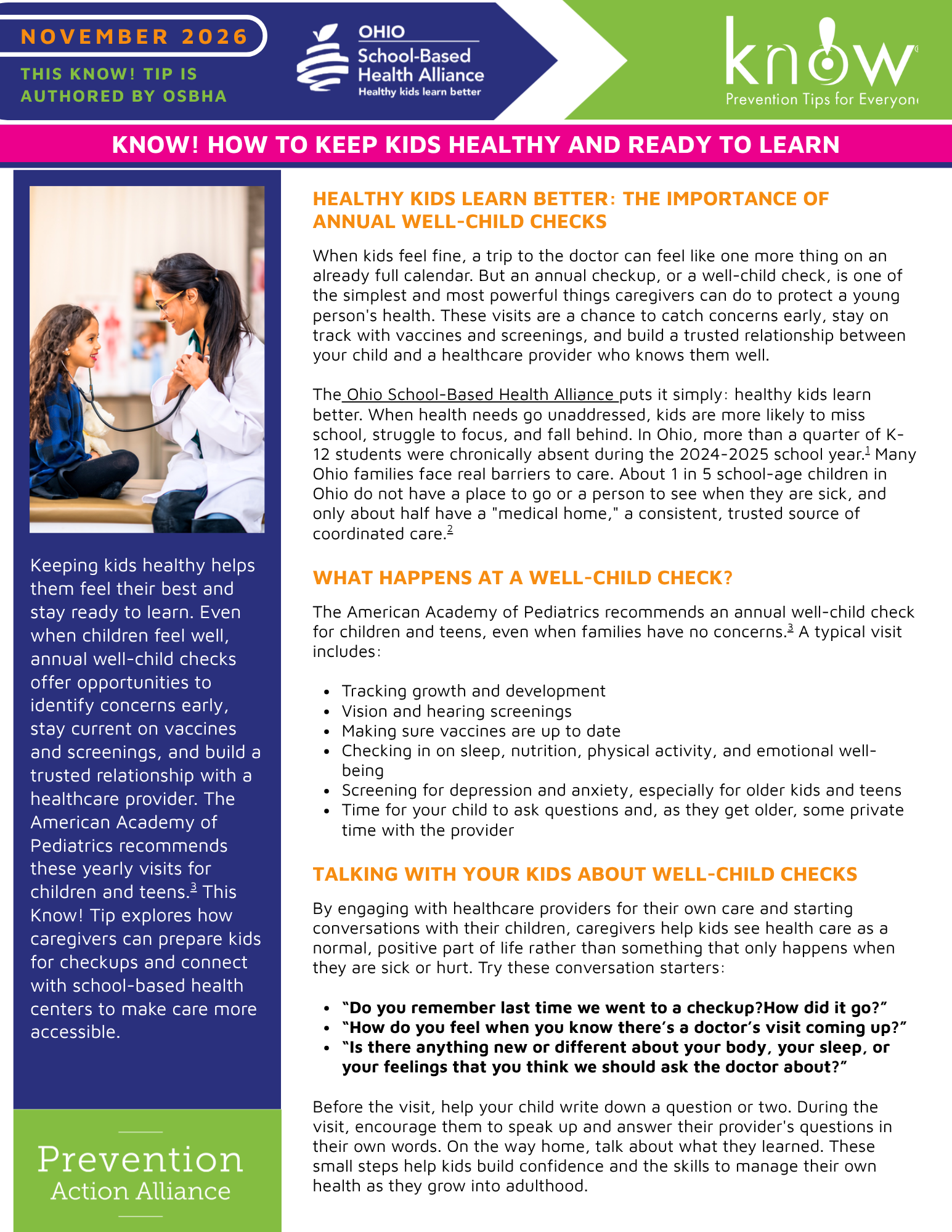
Keeping kids healthy helps them feel their best and stay ready to learn. Even when children feel well, annual well-child checks offer opportunities to identify concerns early, stay current on vaccines and screenings, and build a trusted relationship with a healthcare provider. The American Academy of Pediatrics recommends these yearly visits for children and teens.3 This Know! Tip explores how caregivers can prepare kids for checkups and connect with school-based health centers to make care more accessible.
Download the PDF for the Full Tip
HEALTHY KIDS LEARN BETTER: THE IMPORTANCE OF ANNUAL WELL-CHILD CHECKS
When kids feel fine, a trip to the doctor can feel like one more thing on an already full calendar. But an annual checkup, or a well-child check, is one of the simplest and most powerful things caregivers can do to protect a young person's health. These visits are a chance to catch concerns early, stay on track with vaccines and screenings, and build a trusted relationship between your child and a healthcare provider who knows them well.
The Ohio School-Based Health Alliance puts it simply: healthy kids learn better. When health needs go unaddressed, kids are more likely to miss school, struggle to focus, and fall behind. In Ohio, more than a quarter of K-12 students were chronically absent during the 2024-2025 school year.1 Many Ohio families face real barriers to care. About 1 in 5 school-age children in Ohio do not have a place to go or a person to see when they are sick, and only about half have a "medical home," a consistent, trusted source of coordinated care.2
WHAT HAPPENS AT A WELL-CHILD CHECK?
The American Academy of Pediatrics recommends an annual well-child check for children and teens, even when families have no concerns.3 A typical visit includes:
- Tracking growth and development
- Vision and hearing screenings
- Making sure vaccines are up to date
- Checking in on sleep, nutrition, physical activity, and emotional well-being
- Screening for depression and anxiety, especially for older kids and teens
- Time for your child to ask questions and, as they get older, some private time with the provider