

Suicide Prevention Special Edition: Part 1
In recognition of Suicide Prevention Awareness Month, we’re sharing a special two-part edition of Know! featuring guest author John Ackerman, PhD, Child Clinical Psychologist and Suicide Prevention Clinical Manager for the Center for Suicide Prevention and Research at Nationwide Children’s Hospital.
Below, Dr. Ackerman shares practical guidance to help parents and caregivers start conversations about suicide, understand risk factors and warning signs, and know what to do when they are concerned.
Download the full Know! tip for additional information and practical guidance, and share it with the parents and caregivers in your community.
Download the PDF for the Full Tip
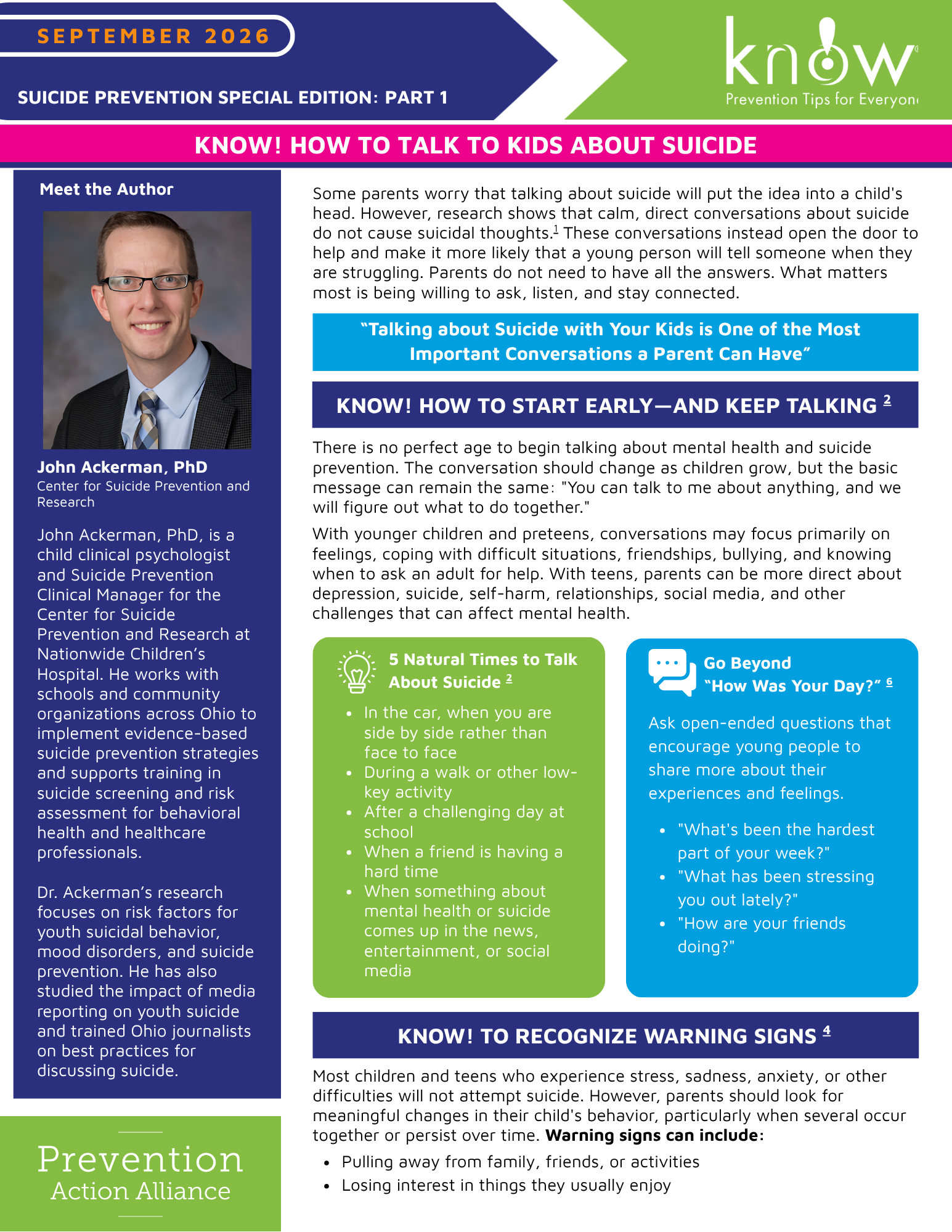
Some parents worry that talking about suicide will put the idea into a child's head. However, research shows that calm, direct conversations about suicide do not cause suicidal thoughts. These conversations instead open the door to help and make it more likely that a young person will tell someone when they are struggling. Parents do not need to have all the answers. What matters most is being willing to ask, listen, and stay connected.
"Talking about suicide with your kids is one of the most important conversations a parent can have."
- Dr. John Ackerman, Suicide Prevention Clinical Manager -
Center for Suicide Prevention and Research at Nationwide Children's Hospital
Know! How to Start Early - And Keep Talking2
There is no perfect age to begin talking about mental health and suicide prevention. The conversation should change as children grow, but the basic message can remain the same:
"You can talk to me about anything, and we will figure out what to do together."
With younger children and preteens, conversations may focus primarily on feelings, coping with difficult situations, friendships, bullying, and knowing when to ask an adult for help. With teens, parents can be more direct about depression, suicide, self-harm, relationships, social media, and other challenges that can affect mental health.
5 Natural Times to Talk About Suicide2
- In the car, when you are side by side rather than face to face
- During a walk or other low-key activity
- After a challenging day at school
- When a friend is having a hard time
- When something about mental health or suicide comes up in the news, entertainment, or social media
Go Beyond,"How Was Your Day?"6
Ask open-ended questions that encourage young people to share more about their experiences and feelings.
- "What's been the hardest part of your week?"
- "What has been stressing you out lately?"
- "How are your friends doing?"
Continue the Conversation
Young people may also find themselves supporting a friend who is struggling. In Part 2 of this special edition, Dr. Ackerman shares how parents and caregivers can prepare kids to recognize when a friend may need help, respond with care, involve a trusted adult, and know they don’t have to handle it alone.
Click here to read Part 2: Know! How to Help Kids Support a Friend in Crisis