
It seems intuitive: tell children and teenagers about how drugs can hurt them, kill them, or ruin their lives, and they won’t use them. For decades, prevention messaging has included these kinds of fearful messages from mock car crashes depicting gruesome scenes to images of people before and after an addiction. Scare tactics emphasize the worst dangers of drug use to create fear and anxiety in the hopes that the fear alone will prevent or stop risky behaviors. Although they seem intuitive to us as adults, a large body of research has consistently shown that scare tactics don’t work in preventing substance misuse.
Why Don’t Scare Tactics Work?
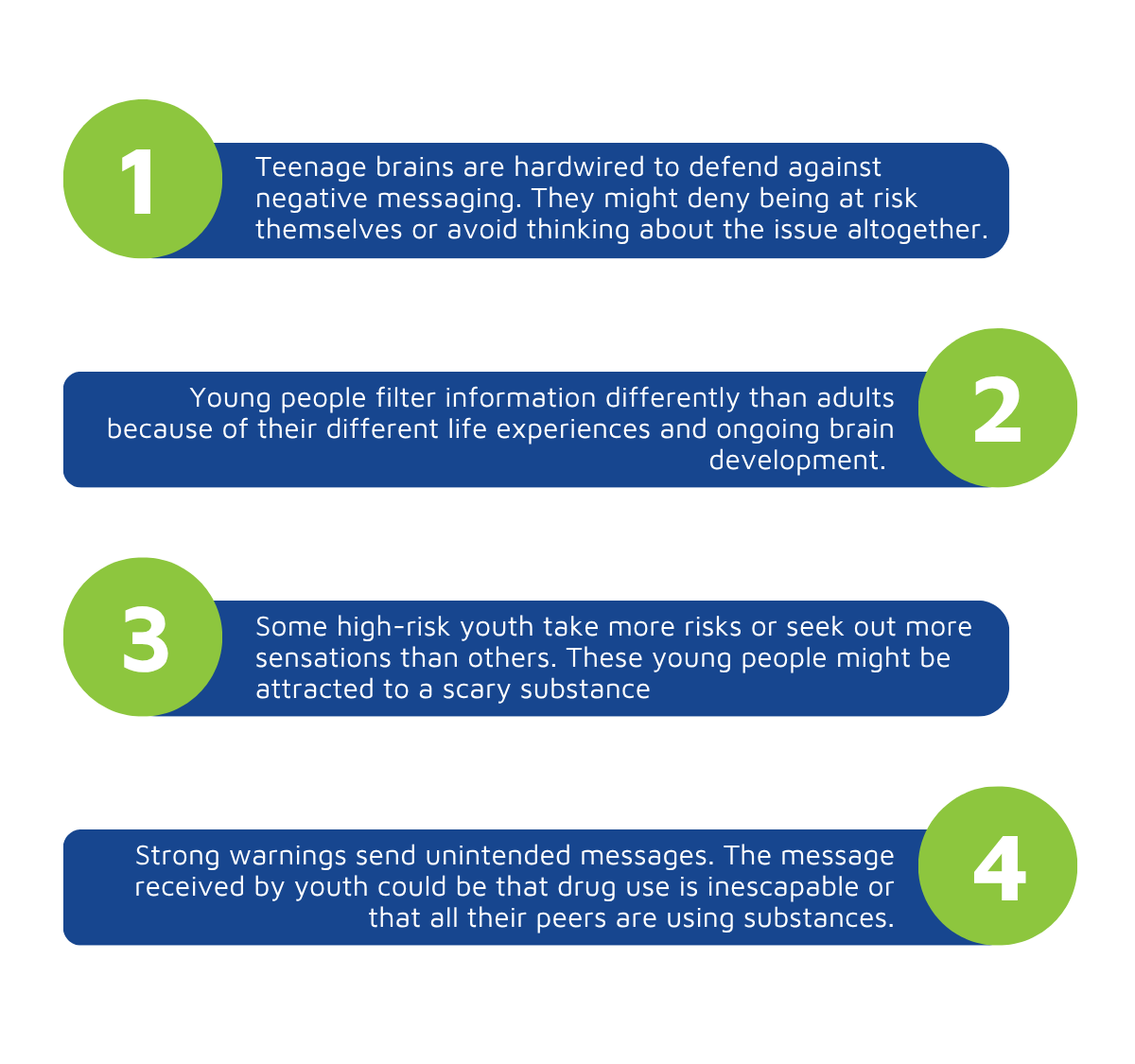
As adults, we naturally avoid things that make us fearful. But teenagers’ brains are different. Risk-taking is a normal part of teenage development, and it can be done in a healthy way. There are four reasons scare tactics don’t work in prevention:
Messaging the Works: Educating about Health
While research has found that scare tactics don’t work to prevent substance misuse, there are evidence-based approaches to preventing substance misuse. These evidence-based practices take into account the community where the prevention services are delivered, the population that the services will affect, and more factors.
So if scare tactics don’t work to prevent substance misuse, what should we use?
By using an evidence-based, ongoing program, we can:
- Provide youth with the education and skills they need to make healthy choices.
- Normalize healthy behaviors by highlighting youth who make healthy choices every day.
- Create environmental prevention solutions that reduce youth access and availability.
- Build up the community’s ability to intervene with and help youth who start misusing drugs.
- Implement and enforce policies that encourage healthy decision-making while discouraging substance misuse.
Download Scare Tactics PDF